
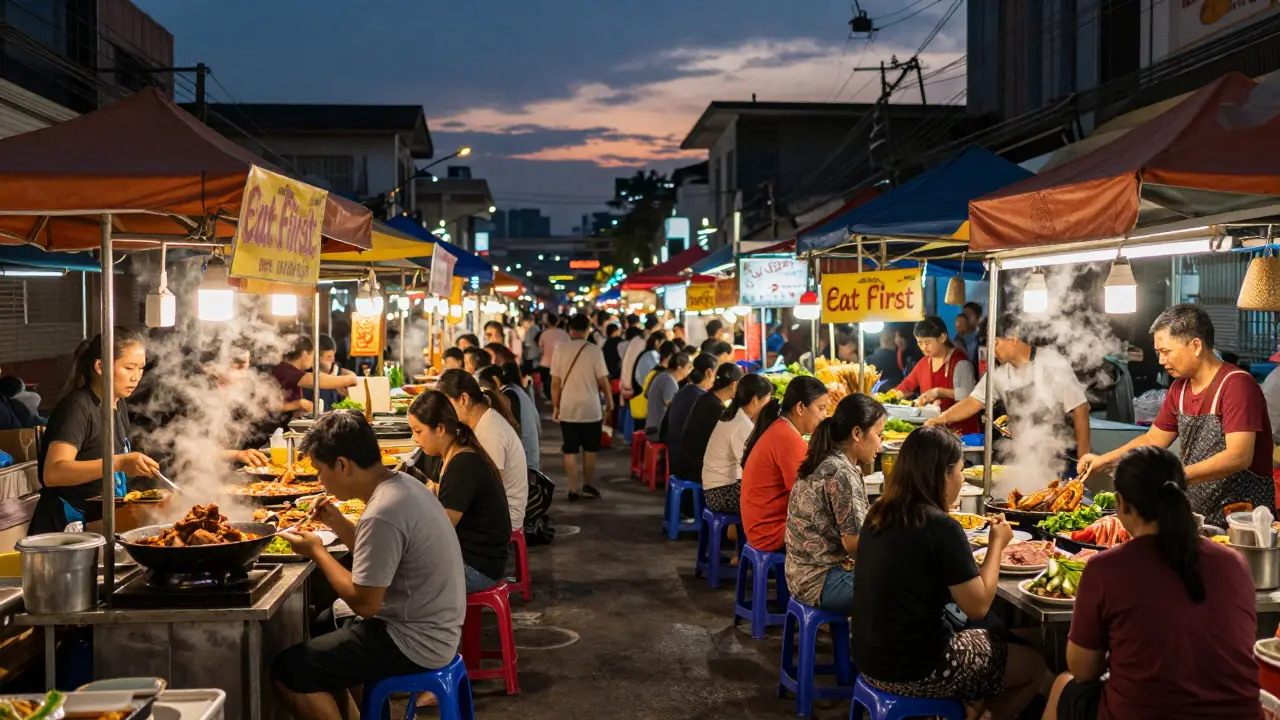
Walking into a Bangkok night market without a plan is like walking into a maze blindfolded. You’ll get lost in the crowds, miss the best stalls, and end up exhausted before you’ve even had your first drink. The city’s outdoor ecosystems are chaotic, vibrant, and overwhelming if you don’t know how to navigate them. But there is a rhythm to these places. It’s not random. The most successful evenings follow a simple sequence: eat first, shop second, and drink last. This strategy isn’t just about convenience; it’s about preserving your energy, protecting your wallet, and maximizing the cultural experience of Bangkok night markets, which are outdoor commercial and dining hubs that operate exclusively during evening hours, serving as the heart of Thai urban nightlife.
Why Timing Matters More Than Location
The clock dictates the flow of any night market in Thailand. Most major venues, including Jodd Fairs and Asiatique the Riverfront, open their gates at 17:00 (5:00 PM) and close around midnight. Arriving right at opening gives you a distinct advantage. The air is cooler, the vendors are setting up fresh ingredients, and the lines haven’t formed yet. By 19:00, the markets hit peak capacity. The heat from the grills mixes with the humidity, and navigating through shoulder-to-shoulder crowds becomes a physical challenge. If you wait until late evening to start eating, you’re fighting for space on plastic stools while the best skewers sell out. Starting early lets you secure a table, taste the freshest food, and observe the local routine before the tourist wave fully settles in.
Phase One: The Food Rush (17:00 - 19:30)
Your stomach should be your primary guide for the first two hours. Bangkok street food is affordable, but portion sizes vary wildly. A meal budget of 50 to 200 Thai Baht per person is realistic for high-quality dishes. At Jodd Fairs DanNeramit, located near Ha Yaek Lad Phrao BTS Station, you can find signature items like spicy pork backbone stews (leng zaap) and Thai-style fried chicken. These dishes require time to cook and eat, so tackling them early ensures you enjoy them while they’re hot and the atmosphere is lively but manageable.
Don’t stick to one stall. The beauty of these markets lies in variety. Order a small plate of Som Tam (spicy papaya salad) for 40-60฿ to cleanse your palate between heavier bites. Try grilled seafood-fish, prawns, or squid-which ranges from 100 to 300฿ depending on size. At Talad Rot Fi Market, look for boat noodles, a regional specialty that offers a deeper flavor profile than standard noodle soups. Remember to communicate your spice tolerance clearly. Pointing and saying “mai phet” (not spicy) or “phet nit noi” (little spicy) prevents culinary disasters. Share tables with locals when possible; this breaks the ice and often leads to recommendations for hidden gems you’d otherwise miss.
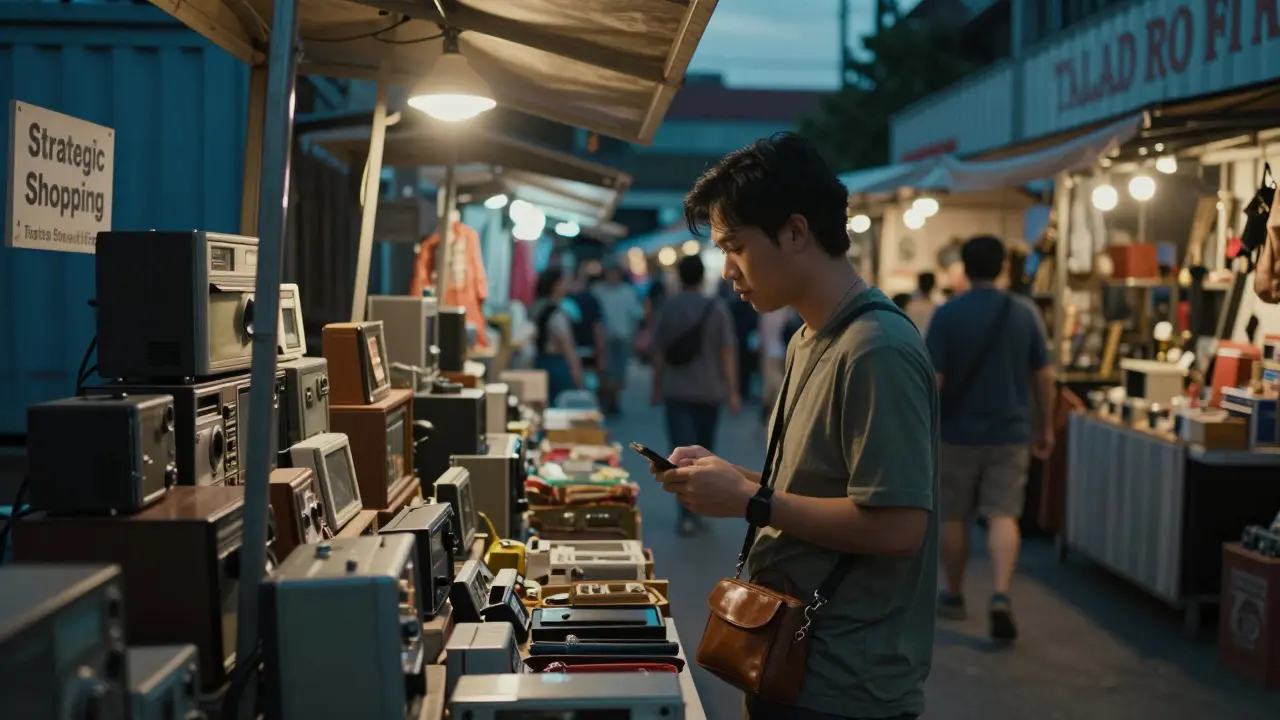
Phase Two: Strategic Shopping (19:30 - 21:30)
Once your appetite is satisfied, shift your focus to browsing. Shopping with a full stomach makes you less impulsive and more discerning. Prices for goods range from 100 to 800฿, covering everything from trendy clothing to vintage electronics. Talad Rot Fi Market is particularly strong here, offering a treasure trove of antiques, collectibles, and retro fashion items housed in converted train containers. The lighting in these sections is often dimmer, creating an intimate vibe perfect for hunting for unique pieces without the pressure of immediate consumption.
Keep cash handy. While some larger stalls accept digital payments, many smaller vendors prefer small bills (20, 50, 100฿). Having exact change speeds up transactions and shows respect for the vendor’s workflow. Look for quality over quantity. A well-made leather bag or a handcrafted souvenir will serve you better than three cheap trinkets. As you browse, notice the layout. Markets are organized into themed sections. Stick to one area at a time to avoid backtracking. This phase also allows you to digest your meal slightly, preventing that heavy, sluggish feeling that ruins later activities.
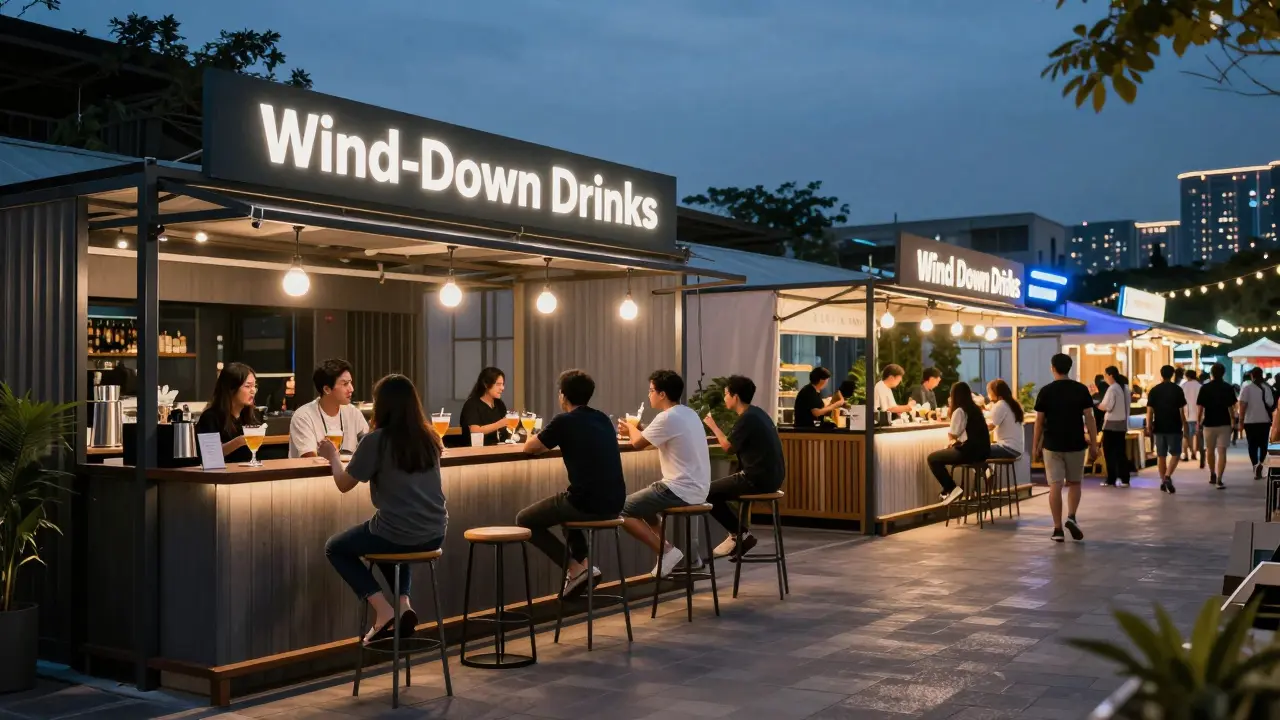
Phase Three: The Wind-Down Drinks (21:30 - Midnight)
This is where many visitors make a mistake: trying to mix drinking with eating and shopping throughout the entire evening. Alcohol slows down digestion and decision-making. By saving drinks for the final hour, you maintain clarity for your food choices and shopping negotiations. Transition to a venue known for its bar integration. Huamum Market stands out here. Unlike traditional food-centric markets, Huamum blends retail stalls with bars scattered throughout the venue. You can grab a beer or cocktail while sitting on low stools, watching the crowd thin out and the energy shift from frantic commerce to relaxed socialization.
If you started at Jodd Fairs or Asiatique, you may need to relocate. Huamum offers a seamless transition because the drinking facilities are built into the market structure. For those staying at Asiatique the Riverfront, the waterfront location provides upscale dining and drinking options against the backdrop of the Chao Phraya River, though prices tend to be higher. The key is to treat this phase as a reward. You’ve eaten well, shopped smartly, and navigated the chaos. Now, sit back, order a cold beverage, and reflect on the sensory overload of the evening. This separation of phases ensures you leave the market feeling satisfied rather than drained.
| Market Name | Best For | Operating Hours | Vibe & Features | Transport Access |
|---|---|---|---|---|
| Jodd Fairs DanNeramit | Eating (Street Food) | 16:00 - 24:00 | Trendy, crowded, diverse food stalls | Ha Yaek Lad Phrao BTS (10 min walk) |
| Talad Rot Fi Market | Shopping (Vintage/Antiques) | 17:00 - 24:00 | Retro, container stalls, boat noodles | MRT/BTS nearby |
| Huamum Market | Drinking & Socializing | 17:00 - 24:00+ | Integrated bars, mala hotpots, retail | Central Area |
| Asiatique the Riverfront | Upscale Dining & Views | 17:00 - 24:00 | Riverfront, entertainment, higher prices | Sathorn Pier Ferry |
Navigating Logistics and Cultural Nuances
Success in these markets depends on preparation. Wear comfortable shoes. You will walk miles. Bring a light jacket; the AC in transport hubs contrasts sharply with the humid market air. Use the BTS (Skytrain) or MRT (Subway) to reach major markets. Traffic in Bangkok is notorious, and taxis can take twice as long as rail transit. For Jodd Fairs, exit at Ha Yaek Lad Phrao and walk south. For Asiatique, take the ferry from Sathorn Pier-it’s scenic and avoids road congestion entirely.
Cultural etiquette matters. Don’t haggle aggressively on food prices; they are fixed. Haggling is acceptable for clothing and souvenirs, but keep it friendly. A smile goes further than hard bargaining. Respect personal space. Vendors work in tight quarters. Move quickly once you’ve made your selection. Also, be mindful of waste. Many stalls provide minimal packaging. Carry a small bag for trash if possible, or dispose of it properly at designated bins. This respect for the environment and the workers enhances your experience and leaves a positive impression.
Optimizing Your Budget
A full evening following this strategy can be incredibly affordable. Here’s a breakdown for a single traveler:
- Food: 150-400฿ (2-4 items, sharing plates, including drinks like Thai iced tea).
- Shopping: 100-800฿ (depending on whether you buy a t-shirt or a vintage lamp).
- Drinks: 150-300฿ (beer or cocktails at integrated bars).
Is it safe to eat street food in Bangkok night markets?
Yes, it is generally very safe. High turnover means ingredients are fresh. Look for stalls with visible local crowds-locals know where the quality is. Avoid pre-cut fruit exposed to flies, and ensure meat is cooked thoroughly. Bottled water is widely available.
Which market is best for beginners?
Jodd Fairs DanNeramit is ideal for beginners. It has clear signage, English menus at many stalls, and easy BTS access. The layout is straightforward, making it less intimidating than older, more chaotic markets.
Can I pay with credit cards at night markets?
Rarely. Most vendors are cash-only. Some larger shops at Asiatique may accept cards, but always carry sufficient Thai Baht in small denominations. ATMs are available but charge fees.
What time should I arrive to avoid crowds?
Arrive at 17:00 or 17:30. This is when markets open. You’ll have the best selection of food, cooler temperatures, and easier navigation. By 19:00, crowds peak significantly.
Is Huamum Market good for families?
It can be, but it’s louder and more focused on bars and late-night vibes. For families, Jodd Fairs or Asiatique offer more structured entertainment and safer, kid-friendly food options earlier in the evening.
Write a comment