
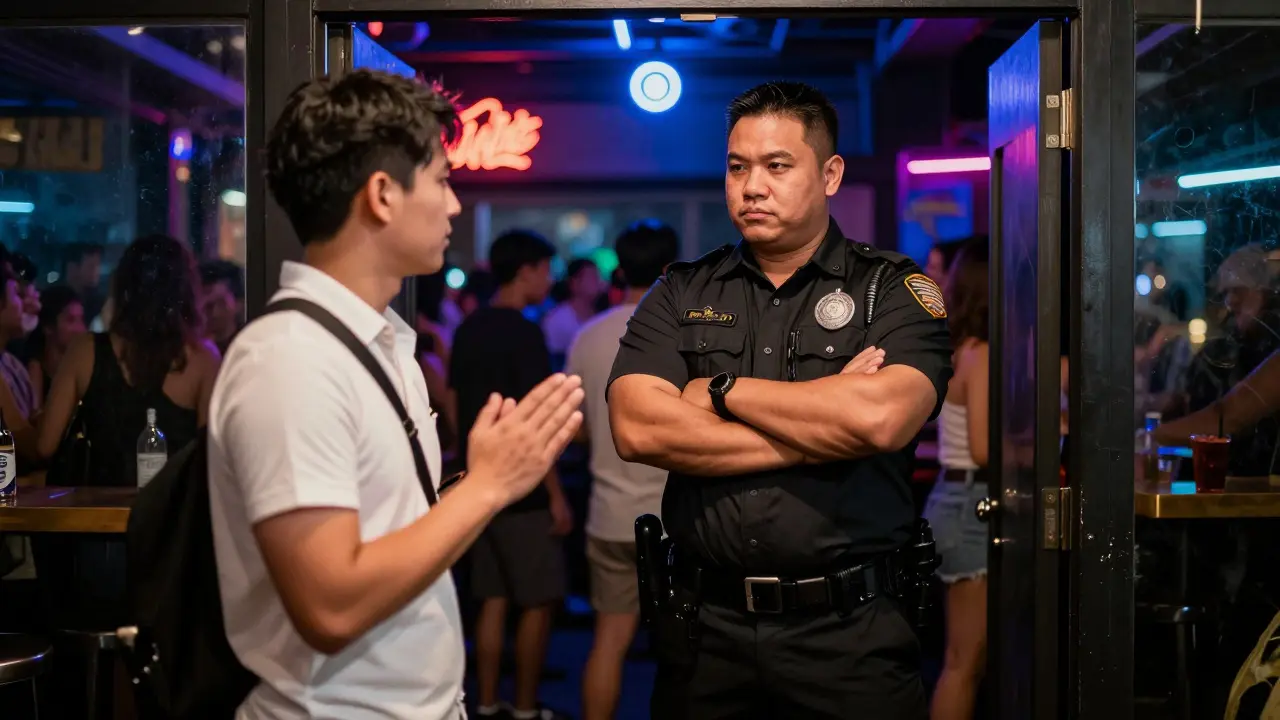
Walking into a club in Bangkok’s Khao San Road or Sukhumvit can feel electric. The music is loud, the lights are flashing, and you’re ready for a great night out. But standing between you and that entrance is often a Bangkok bouncer, whose job is to keep the venue safe and orderly. If you’ve ever felt intimidated by their size or confused by their instructions, you aren’t alone. Many travelers make the mistake of treating these interactions like arguments back home. In Thailand, that approach doesn’t just fail-it can quickly turn dangerous. Understanding how to interact with security staff using calm, respectful de-escalation techniques isn’t just about politeness; it’s about staying safe and enjoying your trip without legal headaches.
The Cultural Context: Why "Saving Face" Matters More Than Being Right
To understand why bouncers in Thailand act differently than those in New York or London, you need to grasp one core concept: kreng jai. This Thai cultural value translates roughly to "consideration for others" or "not wanting to cause trouble." It deeply influences social interactions. When a bouncer tells you something-whether it’s about dress code, capacity, or behavior-they are often trying to maintain harmony within the venue. Challenging them publicly causes them to lose face (thai naa). For a patron, losing face means embarrassment. For a bouncer, it means looking weak in front of their team and customers.
If you argue loudly or aggressively, you aren’t just disagreeing with a rule; you are attacking their dignity. In many Western cultures, direct confrontation is seen as assertive. In Bangkok, it is viewed as disrespectful and potentially threatening. The goal isn’t to win an argument; it’s to preserve everyone’s dignity. By showing respect, you signal that you are not a threat. This simple shift in mindset changes everything. Instead of seeing the bouncer as an obstacle, see them as a gatekeeper who wants to let you in if you play by the rules. Acknowledging this cultural nuance is the first step in de-escalating any potential tension before it even starts.
Body Language: Your Silent Conversation
Before you say a word, your body is already communicating. Security professionals are trained to read non-verbal cues instantly. According to industry standards from organizations like the Crisis Prevention Institute, non-verbal communication accounts for the majority of initial interaction assessments. Here is how to use your body language to stay safe and respectful:
- Keep Your Hands Visible: Never put your hands in your pockets when approaching a bouncer. Keep them relaxed at your sides. Hidden hands look suspicious and can trigger a defensive response.
- Maintain an Open Posture: Avoid crossing your arms. Crossed arms signal defensiveness or aggression. Stand upright but relaxed, not rigid. A slight lean forward can show interest, while leaning back might look dismissive.
- Eye Contact Without Staring: Make steady eye contact to show confidence, but don’t stare intensely. Aggressive staring is interpreted as a challenge. A gentle nod while making eye contact signals understanding and respect.
- Respect Personal Space: Give the bouncer room. Standing too close feels invasive. Maintain an arm’s length distance unless they invite you closer. This respects their professional boundary and reduces their sense of threat.
If you notice the bouncer stepping back or shifting their stance, recognize it as a sign that you may be encroaching on their space. Back off slightly. These small adjustments tell the security staff that you are calm and controlled. Remember, their job is to manage risk. If you look relaxed, you reduce their perceived risk level immediately.
Verbal De-Escalation: What to Say (and What Not to Say)
When words are exchanged, tone matters more than vocabulary. You don’t need perfect Thai to handle most situations, but you do need a calm demeanor. Shouting, raising your voice, or using aggressive tones will almost always result in being denied entry or ejected. Instead, use these verbal strategies:
1. Use Simple, Clear Language Avoid complex explanations or sarcasm. Sarcasm rarely translates well across language barriers and is often perceived as mocking. Stick to short, direct sentences. If you don’t speak Thai, use simple English phrases. Most bouncers in major tourist areas speak basic English, but their comprehension is better for clear, slow speech than for rapid-fire idioms.
2. Acknowledge Their Authority Start with phrases that show respect. Saying "Thank you" or "I understand" goes a long way. Even if you disagree with the rule, acknowledging their position de-escalates tension. For example, instead of saying, "This is stupid," try, "I see the issue. How can I fix this?" This shifts the conversation from conflict to problem-solving.
3. Listen Actively Let the bouncer finish speaking. Don’t interrupt. Active listening shows you respect their time and role. Paraphrase what they said if possible. "So, you need me to remove my jacket because of the heat policy?" This confirms you heard them correctly and gives them a chance to correct you if you misunderstood. It also buys you time to think calmly rather than reacting emotionally.
4. Avoid Confrontational Questions Never ask, "Who do you think you are?" or "Why are you so rude?" These questions attack character and escalate hostility. Instead, ask neutral questions like, "What is the specific requirement here?" or "Can you clarify the rule?" Neutral questions seek information; confrontational questions seek conflict.

Common Scenarios and How to Handle Them
Not every interaction is smooth. Here are three common scenarios in Bangkok nightlife and how to navigate them with de-escalation in mind:
| Scenario | Bad Reaction | Best Practice |
|---|---|---|
| Dress Code Enforcement | Arguing that your outfit is fine; pointing out others wearing similar clothes. | Accept the decision calmly. Ask if there’s a nearby store where you can buy compliant attire. Show willingness to comply. |
| ID/Age Check | Getting annoyed at the delay; accusing them of racism or bias. | Hand over your passport politely. Smile. Understand that strict ID checks are standard practice in Thailand to prevent underage drinking and ensure safety. |
| Being Asked to Leave | Refusing to move; shouting; threatening to call the police. | Ask calmly for the reason. If it’s unclear, accept it gracefully. Leaving voluntarily preserves your dignity and avoids physical altercation. Call authorities only if you feel physically threatened, not as a bluff. |
In each case, the key is emotional regulation. If you feel anger rising, take a deep breath. Remind yourself that getting into a fight is never worth the potential legal consequences or injury. Bangkok police can be involved quickly in public disturbances, and foreign tourists often face stricter scrutiny. Walking away is not losing; it’s choosing safety over ego.
Understanding Disengagement and Safety Signals
Sometimes, despite your best efforts, a situation escalates. Recognizing when to disengage is crucial. Security training emphasizes that disengagement is a valid safety strategy. If you notice the following signs, step back immediately:
- The Bouncer Calls for Backup: If another security guard approaches, do not interpret this as a threat to overpower you. It means they are securing the situation. Stop moving toward them and wait.
- Rising Voices: If either party raises their voice, lower yours. Yelling matches yelling, which leads to chaos. Silence can be powerful in stopping escalation.
- Physical Blocking: If a bouncer steps in front of you to block your path, stop walking. Do not push through. Pushing is considered assault in Thailand and can lead to immediate arrest.
Disengagement doesn’t mean you’re admitting fault. It means you’re prioritizing your safety. Step back, give them space, and allow emotions to cool. Often, once the immediate tension breaks, the bouncer will re-engage more calmly. If they ask you to leave the area, comply. Once outside, assess the situation. Are you safe? Do you need help? Only then consider next steps.

Legal and Practical Risks of Confrontation
It’s important to understand the stakes. In Thailand, assaulting a security officer-even if they are private employees-can lead to serious legal trouble. Charges may include disturbing public order, assault, or violating venue regulations. Police involvement can result in fines, detention, or deportation in extreme cases. Additionally, venues have zero-tolerance policies for violence. Being banned from multiple clubs in Bangkok can ruin your nightlife experience entirely.
Furthermore, physical altercations carry health risks. Bouncers are trained in restraint techniques. Struggling against them can lead to injuries for both parties. Medical costs in Thailand can be high for foreigners without proper insurance. The financial and personal cost of a fistfight far outweighs the pride of winning an argument. Always choose the path of least resistance when safety is at risk.
Pro Tips for a Smooth Night Out
To minimize friction before it starts, follow these practical tips:
- Dress Appropriately: Research venue dress codes beforehand. Many upscale bars in Sukhumvit require collared shirts and closed-toe shoes for men. Wearing flip-flops or tank tops can get you turned away instantly.
- Carry Your Passport: While some places accept copies, carrying your original passport speeds up ID checks. Keep it in a secure money belt, not your pocket.
- Use Polite Phrases: Learn "Khop khun ka" (thank you) and "Pardarn kha" (sorry). Using local language shows effort and respect, instantly softening interactions.
- Avoid Intoxication Before Entry: Arriving visibly drunk makes you unpredictable. Bouncers are less likely to let intoxicated individuals in due to liability concerns. Save the drinks for inside.
- Stay Aware of Your Surroundings: Don’t get distracted by your phone while talking to security. Focus on the interaction. Awareness helps you pick up on subtle cues.
These small habits build a reputation as a respectful guest. Regulars who behave well often find smoother experiences over time. Bouncers remember patrons who were polite during difficult moments.
When Things Go Wrong: Next Steps
If you’re unfairly treated or feel harassed, document the incident discreetly if possible. Note names, times, and witnesses. However, avoid escalating on the spot. Leave the venue safely. Later, you can report issues to the venue management via email or social media, providing factual details without emotional rants. Most reputable venues care about their reputation and will address legitimate complaints. But always prioritize leaving the scene safely over seeking immediate justice.
Remember, the goal is a fun, safe night out. By respecting cultural norms, using de-escalation techniques, and maintaining calm body language, you transform potential conflicts into positive interactions. Bangkok’s nightlife is vibrant and welcoming to those who approach it with respect. Treat bouncers as partners in safety, not adversaries, and you’ll enjoy the city’s energy without unnecessary drama.
What should I do if a bouncer denies me entry?
Stay calm and ask politely for the reason. Accept the decision without arguing. Arguing rarely changes their mind and can lead to further restrictions. If the reason is dress code, ask if you can change nearby. If it’s capacity, return later. Never force your way in.
Is it safe to tip bouncers in Bangkok?
Tipping is not expected and can sometimes be seen as bribery, especially if offered to bypass rules. It’s better to earn entry through respectful behavior. If you receive exceptional service inside, tipping staff is appreciated, but offering cash to bouncers at the door is discouraged.
Can I call the police if I’m denied entry?
Only if you believe you’re being discriminated against illegally or if you feel physically threatened. Calling police as a bluff to intimidate bouncers is ineffective and can worsen the situation. Police typically side with venue security in civil disputes unless clear laws are broken.
How does "kreng jai" affect my interaction with security?
Kreng jai encourages avoiding conflict and showing consideration. By being polite, patient, and non-confrontational, you align with this cultural value. This makes bouncers more willing to help you resolve issues rather than enforce strict penalties.
What if I don’t speak English or Thai?
Use gestures and facial expressions. Smile, nod, and keep your hands visible. Point to your watch or phone to indicate time. Use translation apps cautiously. Calm body language transcends language barriers and communicates respect effectively.
Are bouncers in Bangkok licensed professionals?
Many are, though enforcement varies. Reputable venues hire trained security personnel. Others may use informal staff. Regardless of licensing, treat all security staff with the same respect. Their authority within the venue is absolute for access control.
What happens if I accidentally offend a bouncer?
Apologize sincerely. A simple "Sorry" with a respectful gesture can defuse tension. Acknowledge the mistake without making excuses. Most bouncers appreciate genuine apologies and will move past minor slights quickly.
Write a comment